It is the culmination of a long journey that has made the company a pioneer in the field of CMMI 5.

In Spain there are just a few companies that have a software quality CCMI 5 certification. The company Novacaixagalicia can be proud of their quality software certification: it is the culmination of a long journey that has made the company a pioneer in the field of CMMI 5 in Spain.
This objective has always been clear to the Systems Enclosed General Management (EGM), as José Antonio Fernández, Architecture Manager of Novacaixagalicia explains: “backing the CMMI model guarantees the quality of our development process. The maturity level that it implies drove us to search for market solutions with the capacity of integrating with our CGDN tool and our Continuous Integration System. We approached this effort with the aim of becoming a complete SQA Portal”.
From their point of view, the project had to be global, not just including static analysis tools that detect potential code defects or metrics generation, but also “to compliment code analysis tools with integration, reporting and dashboards that allow us to implement an application portfolio quality management solution at a corporate level”.
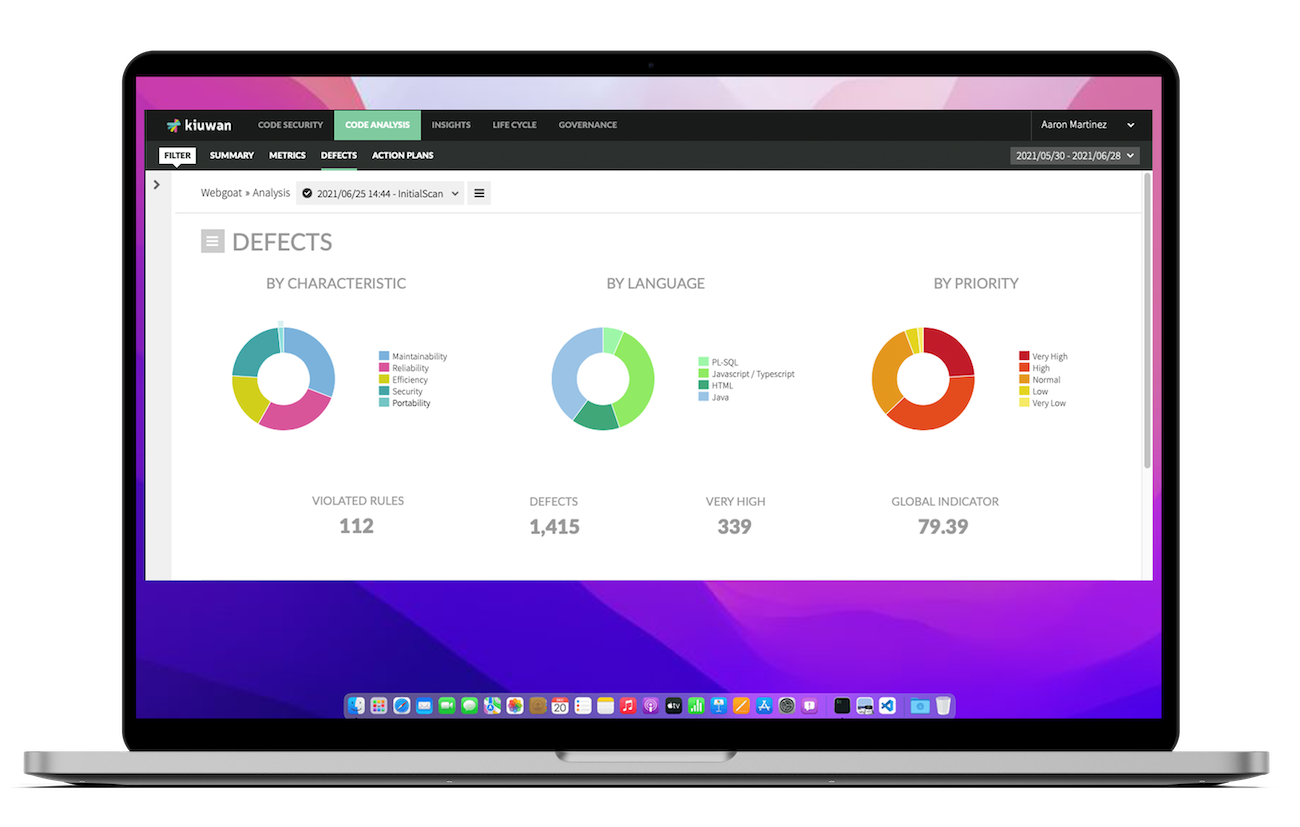
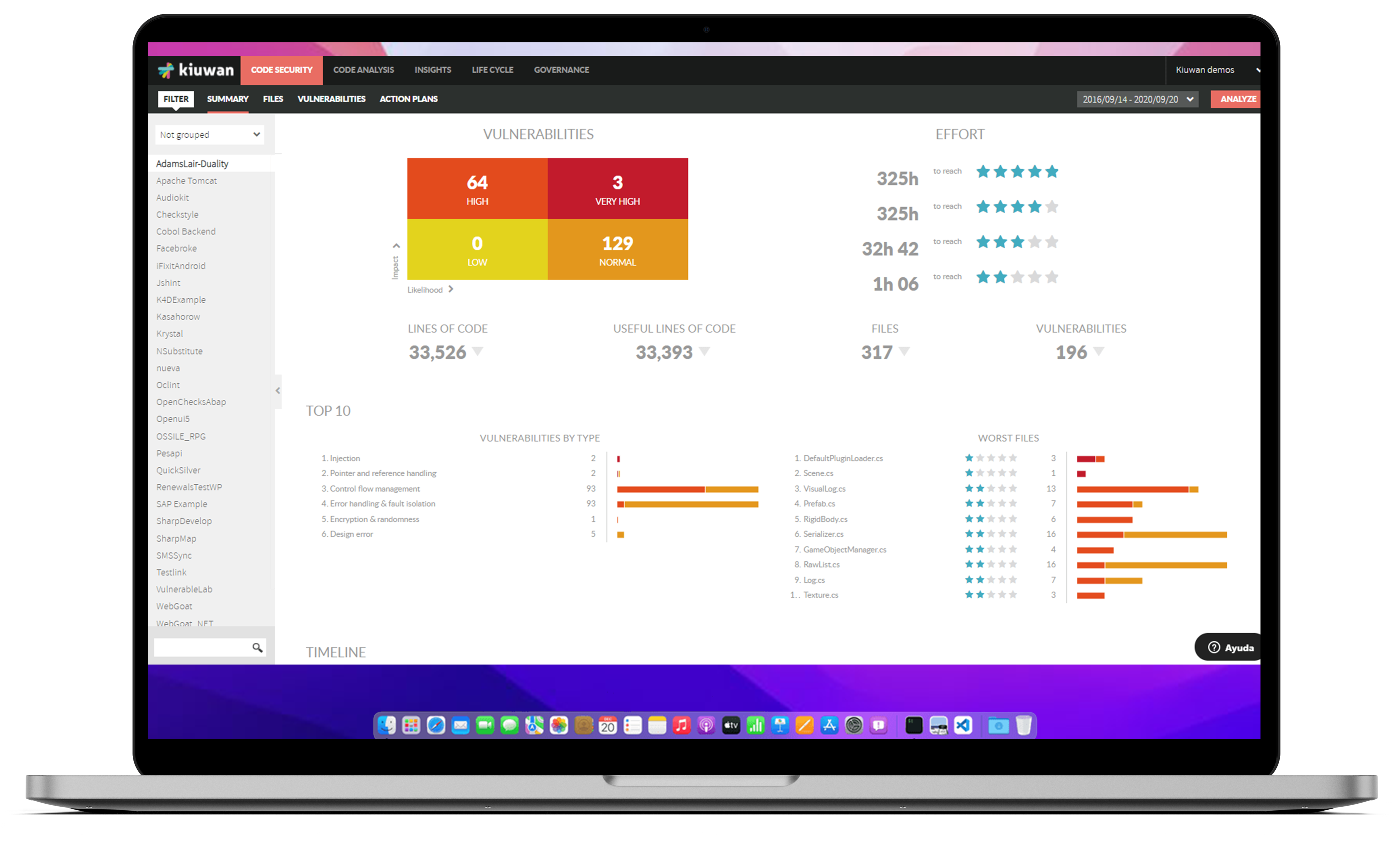
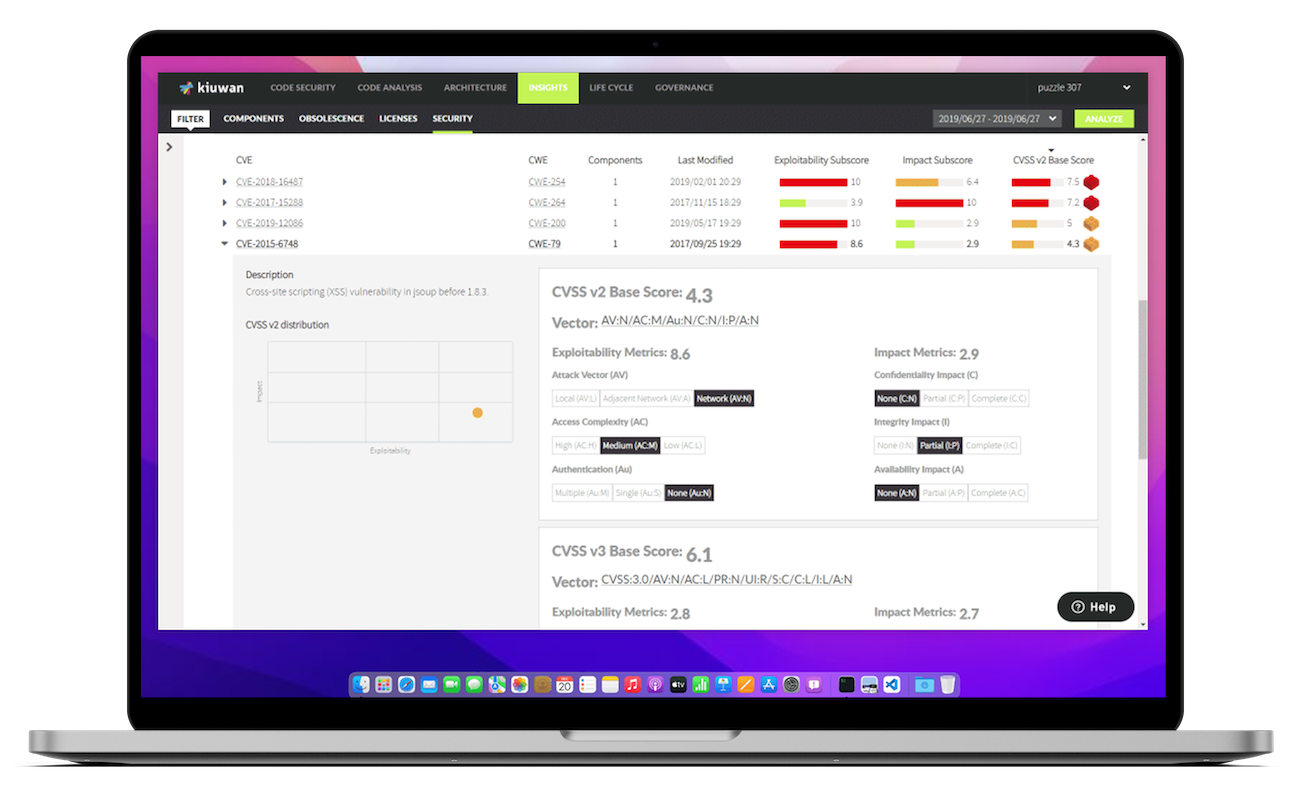
The software quality management tool checKing QA, from Optimyth Software supported this final phase of the process of the EGM System. It helped complete the automatisation of the validation and verification processes. In fact, they have used this software since the last phase of the level 4 certification. By virtue of this software, the company is able to automatically certify the quality of the almost 300 Java developed applications. They are already planning for the next phase of migration to the applications they have on the host.
However before choosing checKing QA, Novacaixagalicia had to evaluate other tools, mainly “open source software such as PDM or Checkstyle”, says Fernández “we identified early on that they didn´t meet our expectations”. He recalls how “an analysis was performed to determine the different features that a software quality management tool, like this, should fulfil regarding our systems. One of the fundamental points taken into account was the easiness with which it can be integrated with other tools already in operation on our systems, as well as the guarantee of the improvement of their evolution”. In addition, the cost of acquisition influenced the final selection of Optimyth Software’s solution, according to Fernández.
Transparent integration
Fernández explains that “checKing QA is an integrated portal that manages the quality of the applications, helps to analyse, gather, organise and categorise the different aspects of software quality (internal, external and in use)”.
All the information generated by the tool is available for use by their users in a web portal via LDAP. The security rules have been carefully defined to include consultative profiles that customise or limit the information accessible by each user.
The solution from Optimyth Software is integrated with all the testing tools in order to provide complete certification reports of code quality, metrics and testing etc. and in order to generate high level indicators (maintainability, reliability ratio and usability etc.). It was also integrated, with “little effort”, with the corporate deployment environments of Novacaixagalicia: Suse Linux Enterprise Server, IBM, WAS (in cluster HA), and SQL Server 2005.
In the words of the manager José Antonio Fernández, “what is different from CMMI 3, is that level 5 does not imply significant differences in the way that providers are dealt with”. However, he continues, “the implementation of CMMI, in general, is that it has involved all of the providers in the accomplishment of certain practices that are common to the entire installation. For example, although analysis and measurement activities belong to the lower levels of CMMI; it is true that the generation and quality of certain metrics are important for the processes at higher and more mature levels” In this sense, some of the providers are going a step further by getting involved in an ongoing effort which “affects the peer reviews”, he says.
Regarding the benefits of the project, Fernández highlights the ability to model and automate the application quality model, the automatisation of the software verification and validation processes, and a more agile behaviour of the reporting systems for providers and to the executives.
According to the manager of the business, this last point has resulted in a time and effort reduction benefit of the certification cycles and in the quality assurance of all the developments, thus resulting in higher project profitability of each development.
Factors to success
José Antonio Fernández is convinced that among other factors, the key to obtain the CMMI level 5 is the training of personnel, the follow up of the projects and the conviction in what CMMI brings to project management and to the final product improvement. “Basically, the knowledge of why things are done and the benefits that they will bring, are the keys to success of any improvement process implementation. We have to banish the idea that these practices only generate more work and administration, when in reality they make procedures more manageable and effective, obtaining a better final product quality and a decrease in costs, precisely because of the sound management of the resources and activities”.
Internalise the project
To approach a global project, such as this one, in an organisation requires the direct involvement of the top management. Fernández emphasizes that “the implementation of each process and of each little element or practice, in the general frame of software development, has great importance. However it would not have been possible without a clear understanding of the purpose by all the members of the organisation and without visible support for the team in charge of the definition and implementation of the improvement processes”.
With regard to the rest of the organisation and the change management, Fernández sees that it is obvious that a “forced implementation would not have worked in this kind of project. There must be a clear message; everybody must know the direction that we have taken; but we will not achieve the expected results without the real involvement of each one of us”.
One of the main obstacles that face a quality project is that the users end up feeling over-controlled. This was not the case with Novacaixagalicia and the architecture director denies that “there were a sense of over-control”, adding that “the project information was available to all the members of the organisation and that there was total visibility”.
Nevertheless, he recognises that “this sense of being controlled can be experienced in the first phases of the implementation and the project revisions, but that, once the objectives are clear, it is internalised and becomes an element for helping the management and project teams”. In addition we have the fact that the follow up and QA revisions performed by the QA team provides project status visibility to their managers and to higher levels within the organisation. From Systems, there is the conviction that this knowledge is key for the decision making process and to correct any undesirable deviation in the earlier phases.
Although it is a live project, we could say that Novacaixagalicia ends its software quality journey. A trip where they have spared neither human resources, time nor money.
Regarding this last point, José Antonio Fernández explains that it is difficult to calculate the costs, due to the fact that “the main costs involved in this kind of improvement process are linked to training the personnel in some of the impacted areas (for example, project management) or linked to the implementation of tools (such as the implementation of the checKing solution) that help to make the process more efficient”.
Nevertheless, he is clear about one thing, that “the process that each organisation follows to navigate through the different levels of maturity is specific to each case”.
Computerworld, 14th January 2011
Novacaixagalicia achieves CMMI 5 - 14jan2011 (EN)